

30 Oct The Value Of Ornamental Grasses In Plant Design
Ornamental Grasses are an amazingly diverse group of plants that are invaluable in plant design. They offer so much to gardens providing structure and form, beautiful panicles in many different sizes and shapes, they highlight the rhythm of the seasons and most importantly for me, they provide movement and texture throughout the majority of the year. And what is more, they are very low maintenance. Their addition to planting designs also brings an element of relaxation and informality which can be used to great effect at different levels of intensity.
Grasses are so versatile too, there being a grass for almost any aspect and soil condition in the garden. They can be used singularly or used en masse depending on the role that you would like them to play. Furthermore, when used in appropriate situations their use can create a strong sense of connectivity with the surrounding area beyond the garden giving the garden a true sense of place.
Planting Grasses En masse
Grasses planted en masse in drifts can also be used to connect different areas of the garden, as in the case in the garden below. Two ends of the garden were previously totally disconnected with a very large expanse of space in between. Such drift that can be seen from the house will continue to provide structure and movement throughout the winter; holding the design together until the spring when bulbs will emerge that will be set off by new fresh grass foliage, starting the growth cycle once again for another year.


Planting Grasses For Atmosphere
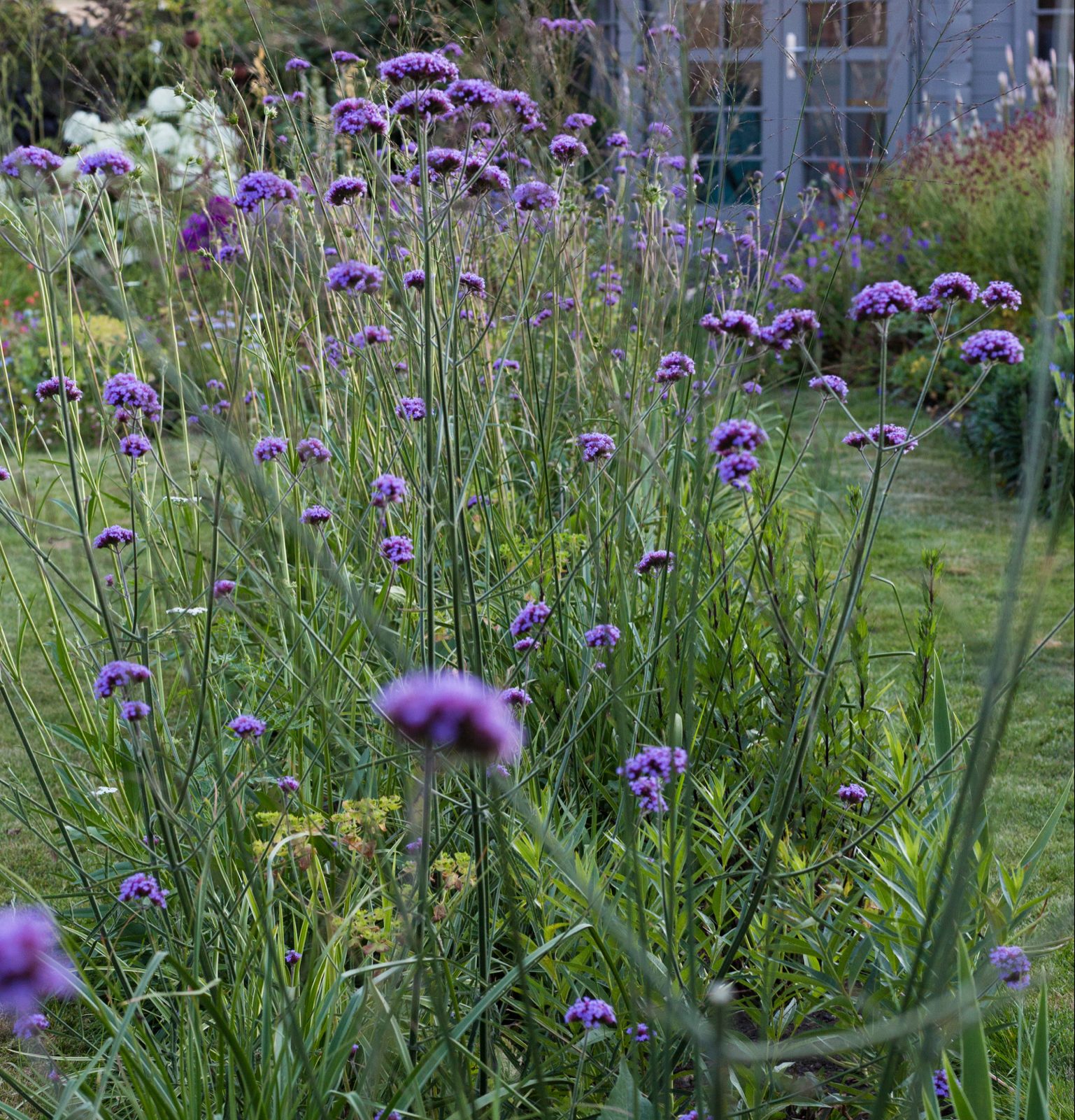
Smaller areas of grasses or individual grasses within garden borders can also add a great deal to the overall feeling of the planting and atmosphere. Depending how they are used they can play so many different roles. In the pictures below, Anemethele lessoniana and Hakonechloa grasses have been used to provide contrast with neighbouring foliage and also to provide softness, texture and movement to the planting schemes in these shady areas.


The photo below illustrates how Stipa tenuissima can be combined with emerging perennials to give a very naturalistic and informal feel to a very sunny area in my own garden.


Planting Grasses To Divide Areas
Grasses can be planted to divide separate garden areas. Different grass species can be used depending on the level of separation that is required. In the gardens below cultivars of Molinia caerulea have been planted in combination with other perennials to create a light see-through veil to give a sense of separation. Different areas in the garden can make your garden space feel larger and adds to interest.


Planting Grasses to Capture Light
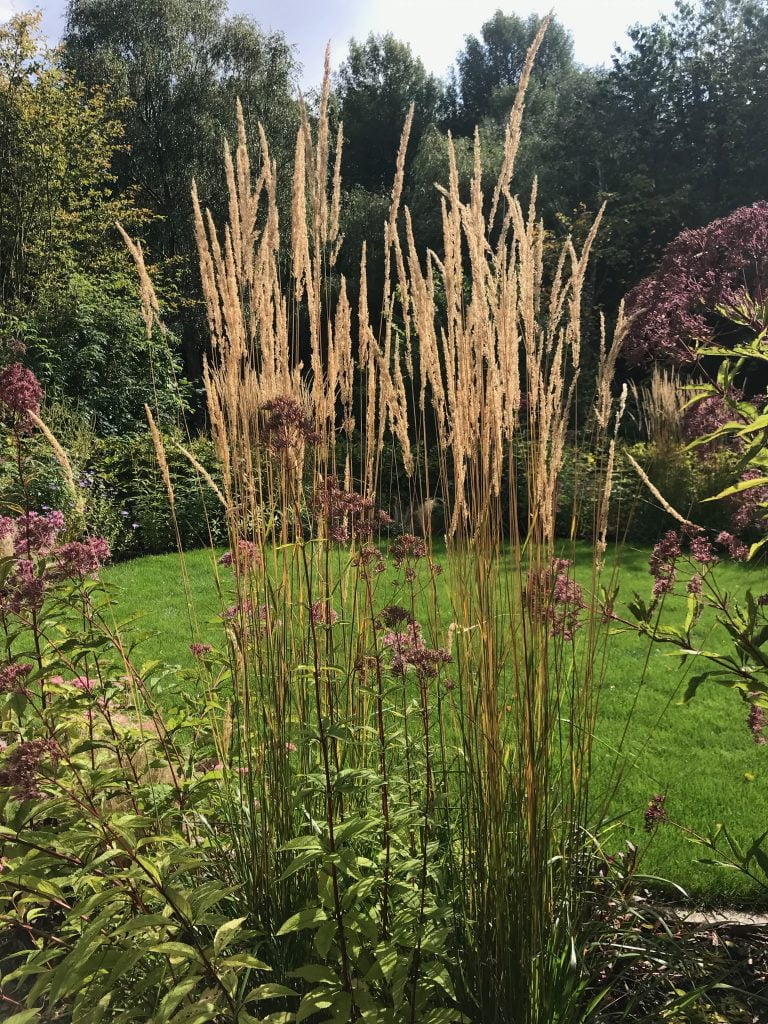
Placed where they can catch the light can add the most stunning beauty amongst neighbouring plants. In the first two gardens below, Calamagrostis x acutiflora catch the evening light whilst Calamagrostis brachytricha catching the early morning light in two further gardens.



Planting Grasses For Autumn and Winter Interest
For me, grasses really come into their own in late summer and autumn adding that interest when many other shrubs and perennials are declining. They also combine so beautifully with autumn foliage, their straw-coloured stems and seed heads contrasting wonderfully with gold, russet, reds and oranges of neighbouring foliage. The pictures below were taken in the wonderful Appletern Gardens in The Netherlands. The first showing how a Miscanthus cultivar combines so amazingly with crab apples and neighbouring perennials adding structure and movement to a border. The second photo highlights how Pennisetum, Molinia and Miscanthus grasses bring together the autumnal colours in this border whilst adding a softness, movement and texture to the planting scheme.


The additional beauty of ornamental grasses is that although they give so much throughout the year they are low maintenance only requiring cutting back in February or combing through to remove the dead foliage depending on the type of grass.
If you can possibly combine grasses in your borders I would highly recommend doing so as they give so much for such little time and effort. One of my favourite grass nurseries is Knoll Gardens, Wimborne, owned by the most inspiring Neil Lucas. A visit at any time of year would be very well worth it as there is a glorious garden where you can see many grass species planted in combination with perennials, shrubs and trees – an incredible wealth of planting ideas and inspiration.
Sorry, the comment form is closed at this time.